


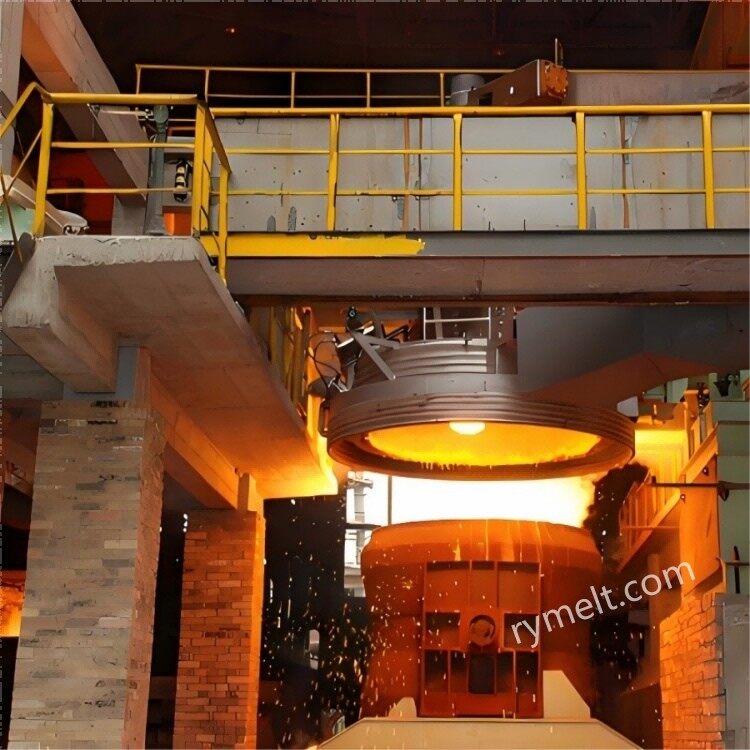
Primary Functions of the Ladle Furnace
Improving Steel Quality: Significantly enhancing the purity of molten steel (reducing sulfur, oxygen, and inclusions), precisely controlling composition and temperature, and meeting the stringent requirements of high-end steel grades (such as pipeline steel, automotive sheet, bearing steel, gear steel, etc.).
Expanding Product Range: Enabling steel mills to produce a wider variety of grades and higher-quality steel products.
Optimizing production processes: Serving as a buffer between the primary furnace and continuous casting machine, it enhances production scheduling flexibility, enabling multi-furnace continuous casting and improving equipment utilization and operational efficiency.

Reducing production costs: Alleviating the burden on the primary furnace (e.g., desulfurization, heating), allowing it to focus on efficient melting and decarburization; precise composition control reduces alloy consumption; improved continuous casting yield and product quality also indirectly lower costs.
Improving process stability: Providing subsequent processes (especially continuous casting) with steel melt that is highly uniform and pure in terms of temperature and composition ensures smooth pouring and ingot quality.

Differences between Ladle Furnace and Electric Arc Furnace
- EAF: This is the primary furnace. Its core function is to melt solid raw materials (primarily scrap steel, sometimes with added pig iron or direct reduced iron) to produce preliminary liquid steel. It marks the starting point of the steelmaking process.
- LF: This is a secondary refining equipment. Its core function is to further refine liquid steel water from primary smelting furnaces (such as EAF or converters). It does not melt solid metals but optimizes, adjusts, and purifies existing steel water.

Different working containers and structures:
- EAF: It is a large furnace body with a furnace cover that can be tilted. The furnace walls and bottom must withstand high-temperature erosion and arc impact. The electrode power is extremely high.
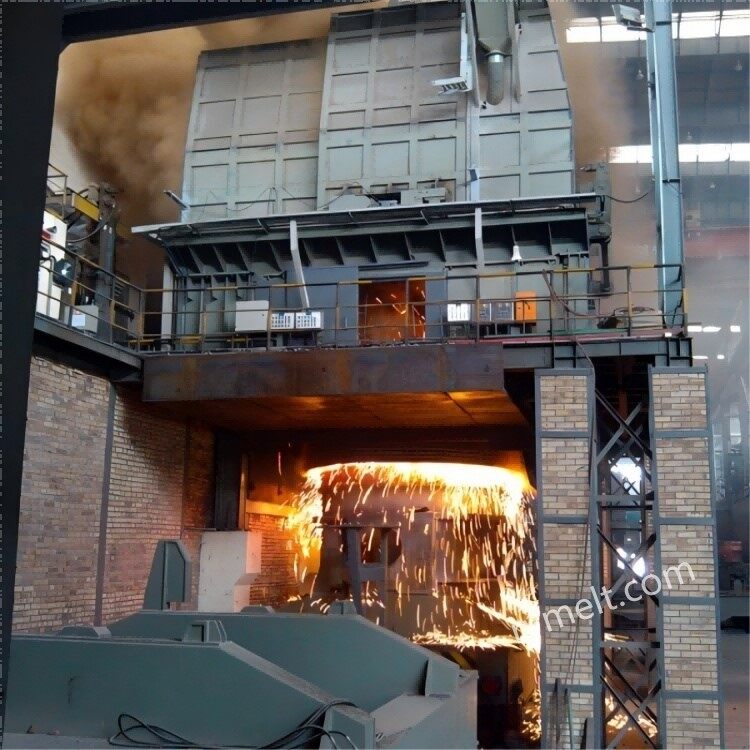
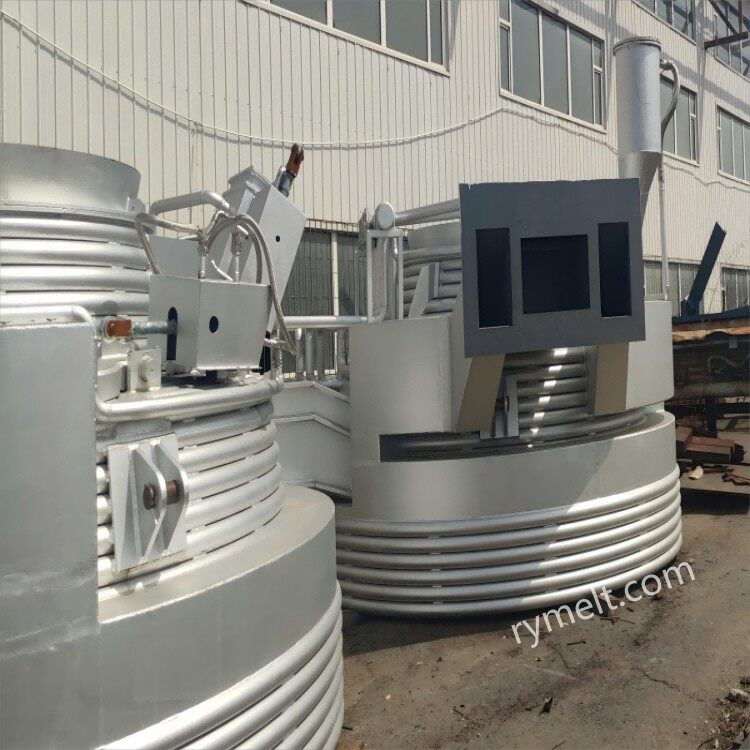
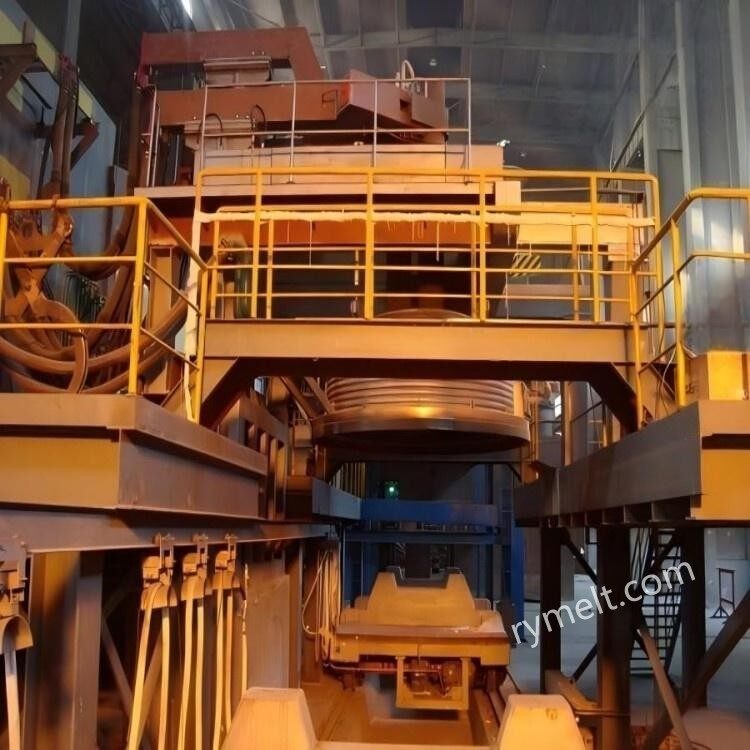
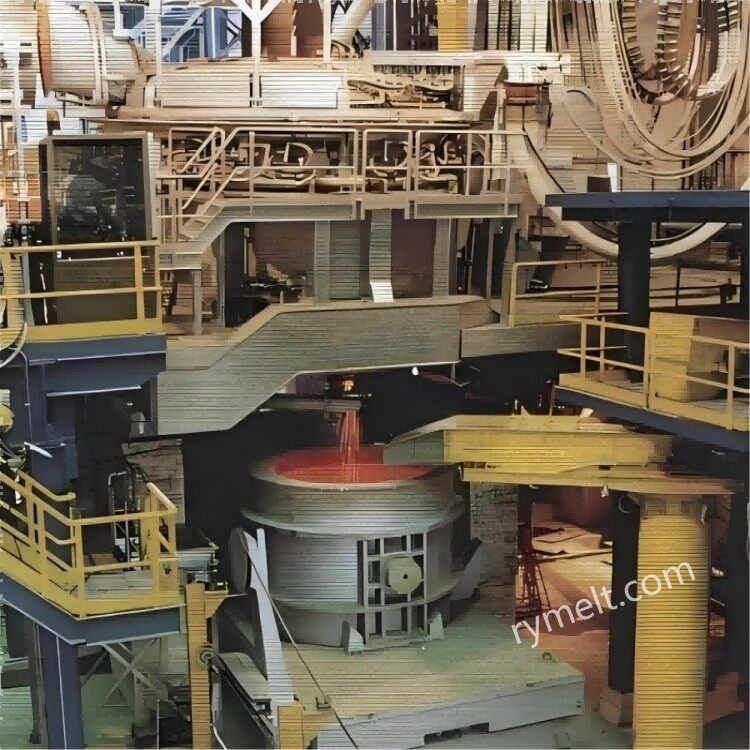
- LF: The working container is the steel ladle itself. The LF furnace body is simply a structure with a heating cover (containing electrodes) and a movable workstation. It introduces argon gas through the permeable bricks at the bottom of the ladle for stirring. The structure is much simpler than that of an EAF.
Differences in the state of the processed material:
- EAF: The primary input is solid raw materials (such as scrap steel), and the output is liquid steel.
- LF: The input is liquid steel from the primary furnace (contained in a ladle), and the output is refined liquid steel (still in the same ladle).

The focus of energy consumption differs:
- EAF: Energy consumption is primarily used for melting solid metal, making it the most energy-intensive stage in the steelmaking process.
- LF: Energy consumption is primarily used for heating/maintaining the temperature of liquid steel to compensate for temperature drop and maintain refining temperature, with electricity consumption far lower than that of the EAF.
Therefore, EAF and LF are indispensable components of the modern electric arc furnace steelmaking process, but they play distinct and sequential roles. EAF is responsible for "rough refining" (melting), while LF is responsible for "refining" (purification and optimization).

The main parameters of our company's ladle refining furnace
| Rated Capacity | Ladle Diameter | Electrode Diameter | Minimum Diameter of Electrode Distribution Circle | Transformer Capacity | Secondary Voltage | Heating Rate |
| (t) | (mm) | (mm) | (mm) | (kVA) | (V) | (℃/min) |
| 10 | 1800 | 200 | 350 | 1250 | 210~104 | 3 |
| 15 | 2000 | 250 | 460 | 2000 | 210~104 | 3 |
| 20 | 2200 | 250 | 460 | 3150 | 210~104 | 3.5 |
| 25 | 2400 | 300 | 540 | 4000 | 240~210~120 | 3.5 |
| 30 | 2600 | 300 | 540 | 5000 | 240~210~120 | 3.5 |
| 40 | 2800 | 300 | 540 | 6300 | 240~210~120 | 3.5 |
| 50 | 2900 | 350 | 600 | 7000 | 240~210~120 | 3.5 |
| 60 | 3150 | 350 | 650 | 8000 | 240~210~140 | 3.5 |
| 70 | 3200 | 400 | 700 | 10000 | 280~240~150 | 3.5 |
| 80 | 3400 | 400 | 700 | 12500 | 280~240~150 | 4 |
| 90 | 3450 | 400 | 700 | 15000 | 280~240~150 | 4 |
| 100 | 3500 | 400 | 700 | 16000 | 280~240~150 | 4 |
| 120 | 3650 | 450 | 750 | 20000 | 315~280~170 | 4 |
| 150 | 3900 | 450 | 750 | 25000 | 315~280~170 | 4 |
| 180 | 4200 | 450 | 750 | 28000 | 400~320~180 | 4 |
| 200 | 4400 | 500 | 850 | 31500 | 400~320~180 | 4 |
| 250 | 4700 | 500 | 850 | 40000 | 400~340~230 | 4 |
| 300 | 4900 | 550 | 950 | 50000 | 400~340~240 | 4 |
Our base is the production site of China's first electric arc furnace. We are a leader in China in terms of production processes and technologies related to ladle furnaces. We have established long-term supply relationships with major steel mills in China and have also gained recognition from overseas customers.


