


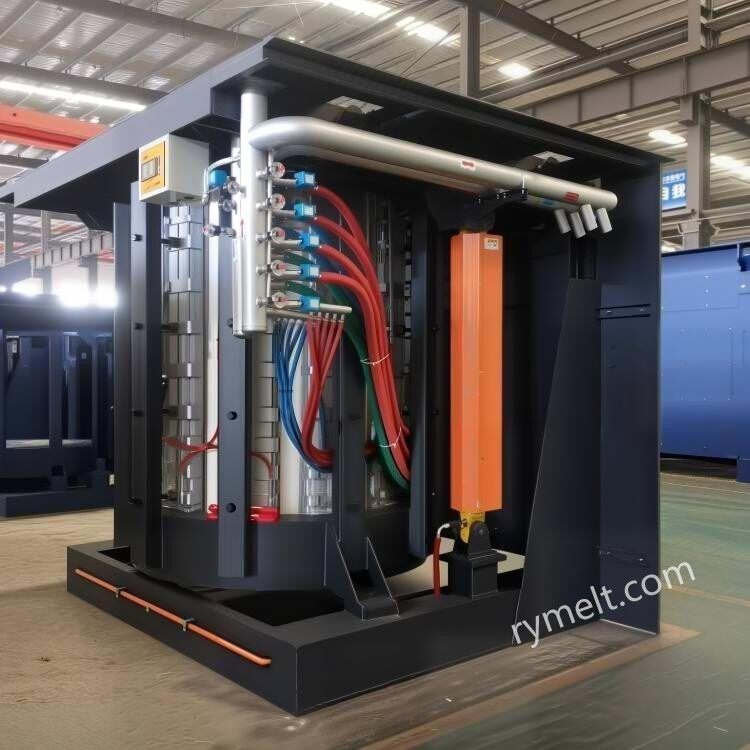
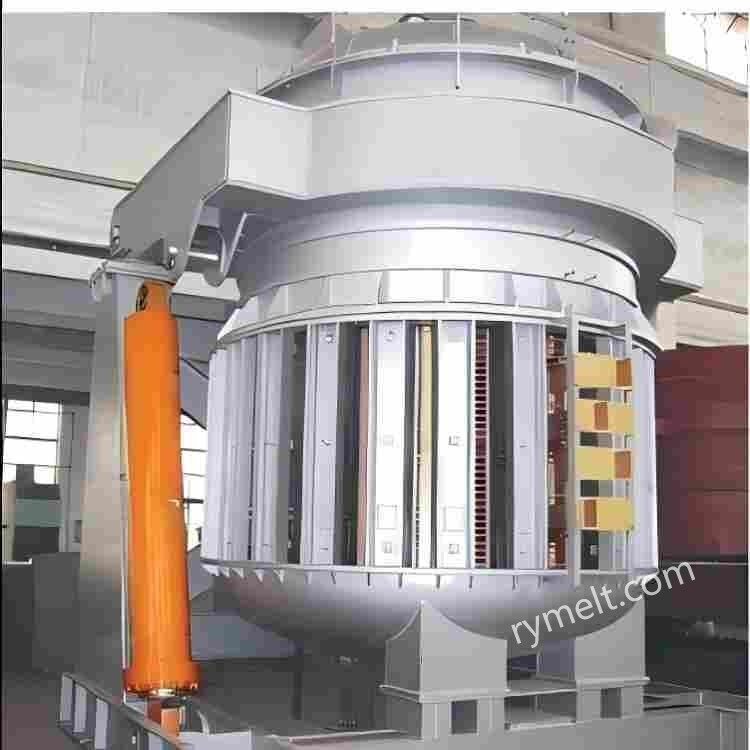
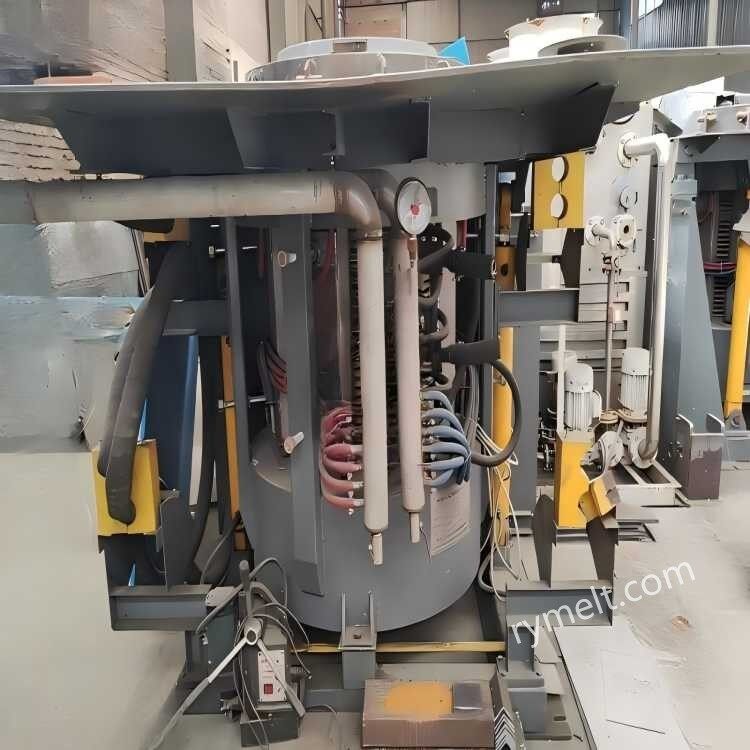
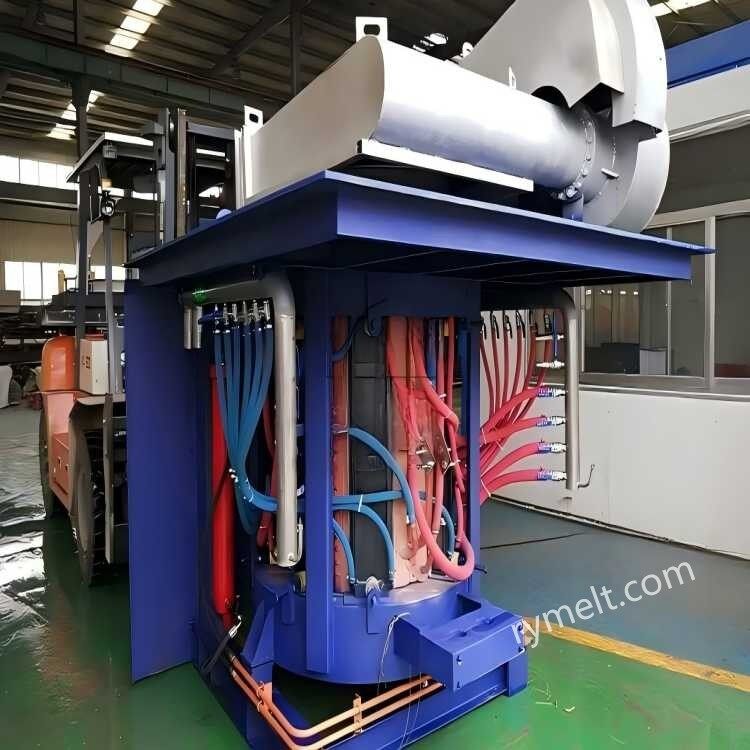
Key Components of the Medium-Frequency Melting System
Power supply system:
The medium-frequency variable frequency power supply cabinet mainly functions to convert the input 50Hz power frequency three-phase alternating current into single-phase, voltage-adjustable medium-frequency alternating current.
Furnace body system:
Induction coil: Made of rectangular hollow copper tubes, with water cooling inside. It is the core component that generates the magnetic field.

Crucible (furnace lining): Located inside the coil, it is used to hold metal charge. Usually made of refractory materials such as quartz sand and magnesia sand by ramming or prefabrication, it is a key consumable. Its quality and service life directly affect production safety and cost.
Furnace frame and tilting mechanism: Supported by a solid steel structure, equipped with a hydraulic or electric tilting system for pouring.

Cooling system:
Provides circulating water cooling for the reactors, capacitors in the power cabinet and the furnace body coil, which is crucial. It is divided into open cooling towers and closed water cooling units.
Control system:
Modern medium-frequency furnaces are equipped with PLC and touch screens to realize fully automatic or semi-automatic control, including functions such as power adjustment, melting process monitoring, fault diagnosis and alarm, and data recording.

Comparison of the main differences between MF Induction Furnace and EAF
| Aspect | MF Induction Furnace | Electric Arc Furnace |
| Raw Materials | Clean scrap steel, alloys, etc. | Scrap steel, pig iron, direct reduced iron, etc. |
| Melting | Fast, direct heating | Slower, relies on arc radiation |
| Refining Capability | None (requires external treatment) | Capable of dephosphorization, decarburization, alloying |
| Temperature Control | Precise (±5℃) | Difficult to precisely control (due to arc instability) |
| Suitable Production Mode | Multi-variety, small batch | Fewer varieties, large batch |
| Initial Investment | Lower (for equivalent capacity) | Higher (complex system, expensive electrode system) |
| Operating Costs | Higher electricity costs, frequent lining maintenance | Significant electrode consumption cost, benefits from scale economies |
Our company has many years of experience in the design and manufacturing of induction furnaces, and can carry out customized production according to customer needs. If you have any needs, please feel free to contact us
Reference parameters of the induction furnace manufactured by our company
| Type | Induction Furnace |
| Voltage | Customized |
| Usage | Melting Furnace / Metal Smelting |
| Core Components | PLC, Gearbox, Motor, Gear |
| Machinery Test Report | Provided |
| Weight | 10 T |
| Dimension (LWH) | Customized |
| Shell | Steel |
| Coil | T2 Copper |
| Special Feature | One Button To Start |
| Input Frequency | 50-60 Hz, Customized |
| Cooling Method | Water Cooling |
| Tilting Method | Hydraulic |
| Composition | Power Cabinet & Furnace Body |
| Melting Rate | 45-60 Min, Customized |
| Warranty | 1 Year |


