


Main Functions
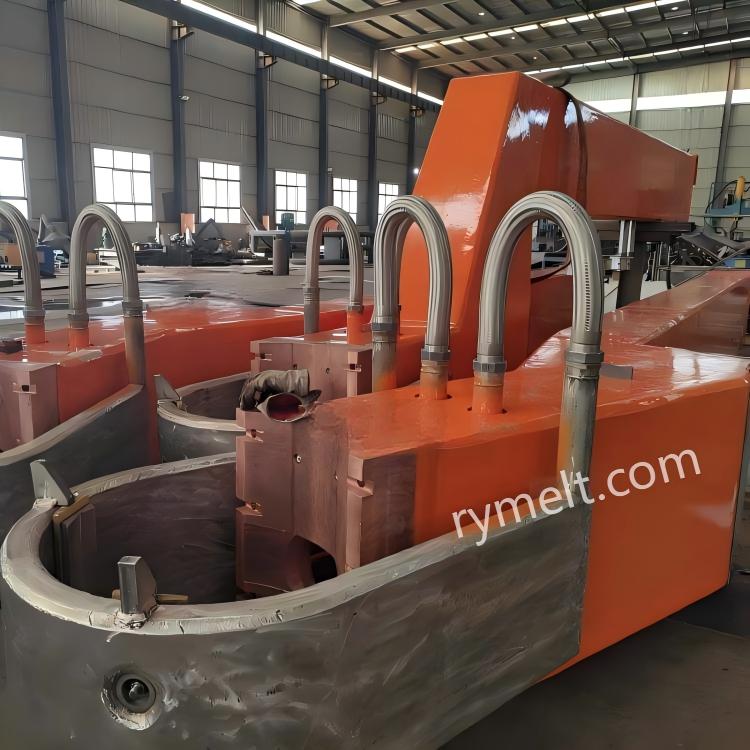
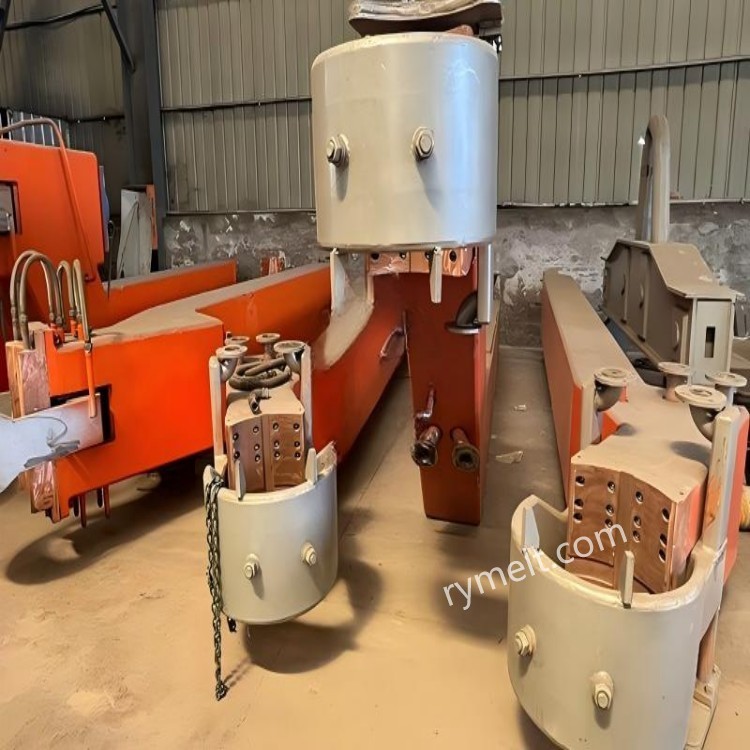
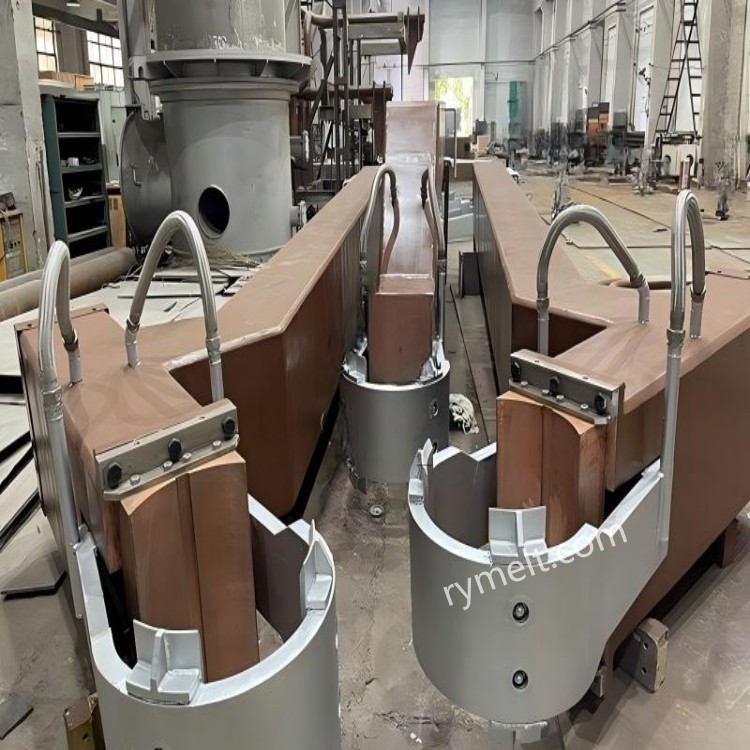
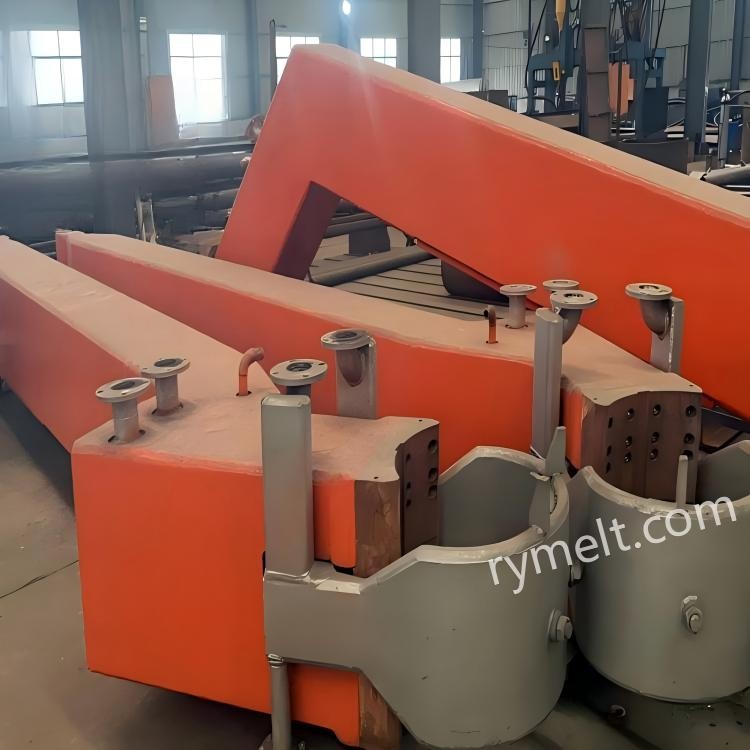
The electrode arm itself acts as a large current-carrying conductor, eliminating the need for traditional complex copper conductor tubes. It receives electrical current directly from the secondary circuit (short network) and transfers it to the electrode. At the same time, it serves as the rigid supporting structure of the entire electrode system, performing mechanical functions such as electrode lifting, positioning, and clamping.
Main Components
A complete conductive electrode arm system typically consists of the following parts (taking a side-phase arm as an example):
- Arm Body:The main structure of the system, designed to provide both electrical conductivity and mechanical strength. It is typically manufactured as a hollow rectangular box structure.
- Electrode Clamping System:Used to securely hold the graphite electrode. Large clamping forces are usually provided by disc spring assemblies, while pneumatic or hydraulic systems are used to release the electrode when required.
- Electrode Holder:The component that directly contacts the electrode and withstands extremely high current and temperature. It is commonly manufactured from high-performance materials such as chromium-copper alloys.
- Cooling System:Equipped with internal water-cooling channels. Circulating cooling water removes heat from the arm body, preventing overheating and structural deformation.
- Auxiliary Components:Including electrode spray rings, dust-blowing devices, water pipes, hydraulic oil pipes, and water-cooled cable connection plates.

Key Parameters and Selection Guide
Furnace Capacity and Electrode Diameter
This is the most fundamental matching parameter. For example, a 5-ton EAF typically uses a 300 mm graphite electrode, a 10-ton furnace uses a 350 mm electrode, a 20-ton furnace uses a 400 mm electrode, a 50-ton furnace uses a 500 mm electrode, and a 100-ton furnace uses a 600 mm electrode. The cross-sectional dimensions of the arm increase accordingly to provide sufficient current-carrying capacity and mechanical strength.
Current and Voltage Rating
These parameters depend on the transformer capacity and the rated secondary current. The electrode arm must be capable of carrying the maximum operating current during the melting process without overheating.

Electrode Pitch Circle Diameter (PCD)
This refers to the diameter of the circle formed by the three-phase electrodes inside the furnace. It is one of the most critical design dimensions, directly affecting heat distribution and melting efficiency.
Arm Dimensions and Connection Interfaces
The arm profile, cross-sectional dimensions, overall length, and connection method to the mast column (such as flange connection or pin connection) must match the existing equipment design.

Cooling Water Parameters
Including required cooling water flow rate, water pressure, water temperature, and connection specifications. Typical water consumption ranges from several cubic meters per hour for small furnaces to over 30 m³/h for large furnaces. For example, 5–10 ton furnaces generally require about 8 m³/h, 20 ton furnaces about 14 m³/h, and 100 ton furnaces up to 32 m³/h.
Electrode Clamping Method
Pneumatic or hydraulic clamping systems may be used. The working pressure is typically between 0.5 and 0.8 MPa. The preload force of the disc springs must be sufficient to withstand the electrode breaking torque requirements.

Ordering Information
To ensure accurate customized design, customers are usually required to provide the following information when ordering electrode arms:
Electrode Information
Graphite electrode diameter (mm) and the required electrode pitch circle diameter (PCD).
01
Dimensional Requirements
Overall arm length, center distance between electrode phases, connection method to the mast column, and detailed interface dimensions.
02
Equipment Parameters
Transformer rated capacity (kVA) and rated secondary current (A).
03
Cooling and Power Requirements
Cooling water inlet temperature (°C), allowable pressure range (MPa), clamping medium type (hydraulic oil or compressed air), and operating pressure.
04
Additional Requirements
Special anti-corrosion treatments, high-temperature resistant coatings, or specific requirements regarding conductivity, elastic modulus, or other material properties.
05
Providing complete and accurate technical data enables us to quickly design electrode arms that perfectly match your existing Electric Arc Furnace system, ensuring optimal energy efficiency, operational reliability, and service life.


