


Main Types
Classified by structure and heating mode, crucible crystallizers fall into the following categories:
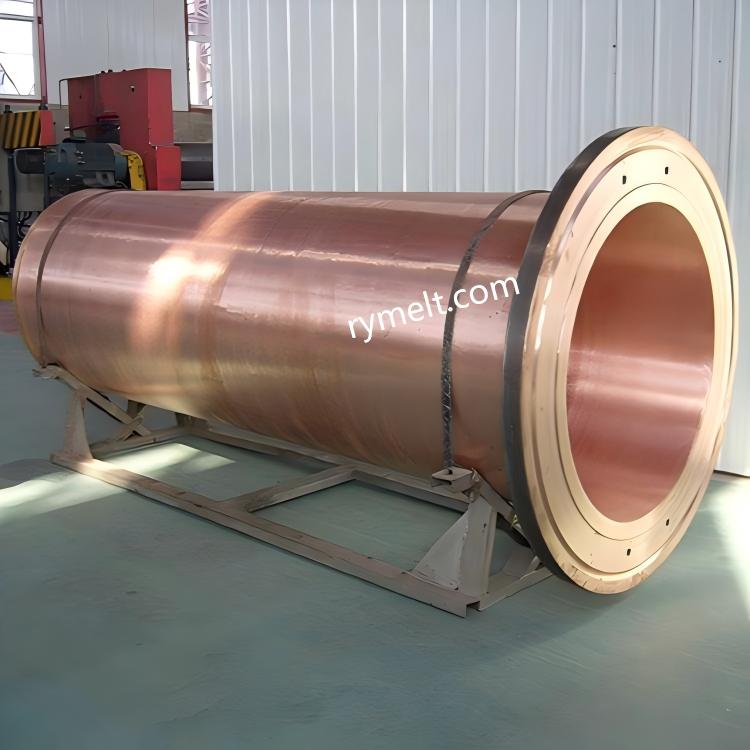
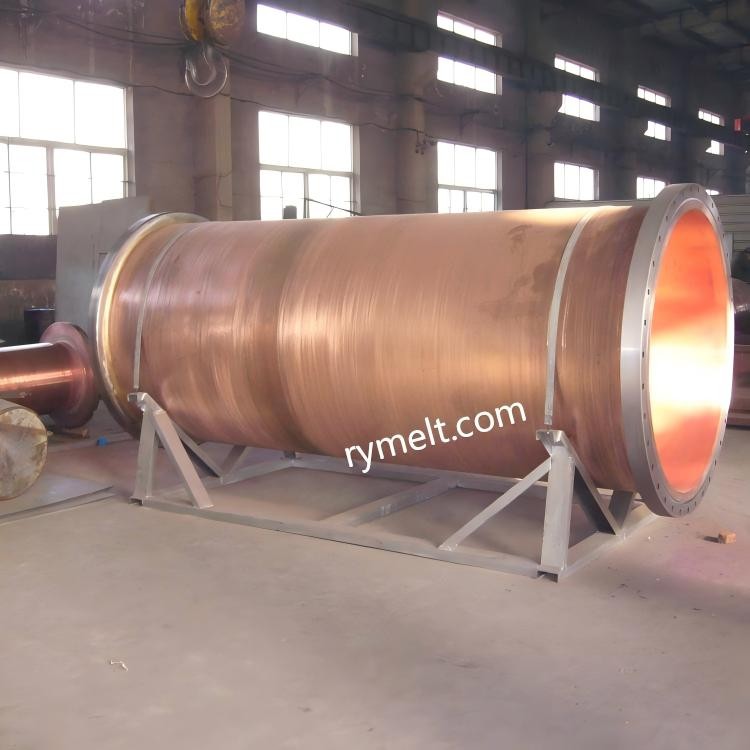
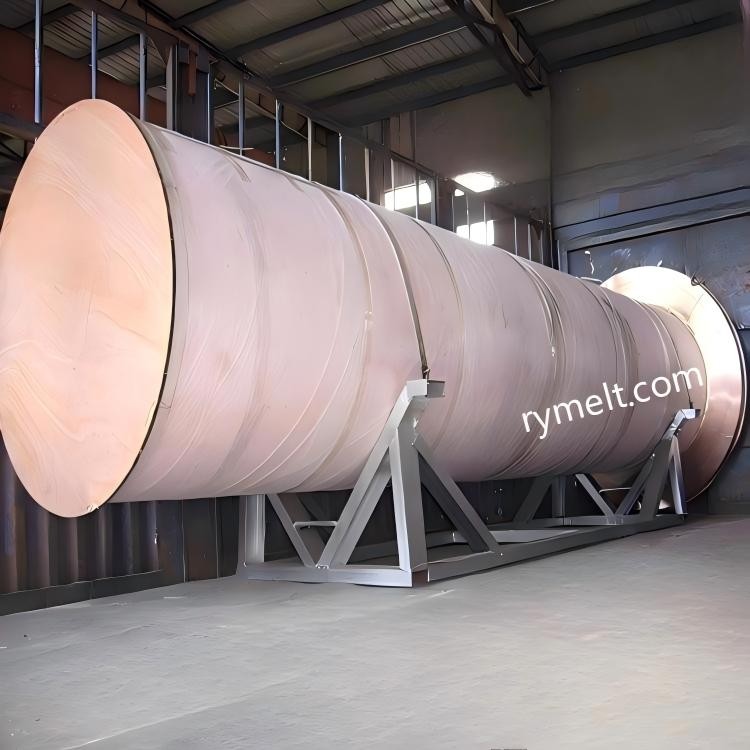
1.Cold Crucible Crystallizer
It adopts a water-cooled copper crucible paired with high-frequency induction heating. The crucible wall remains at a relatively low temperature during operation, and a self-consolidating solidified shell forms inside the melt, effectively preventing contamination of the melt by crucible materials. It is particularly suitable for melting and crystallization of reactive metals such as titanium, zirconium and tantalum, as well as ultra-high purity materials.
2.Graphite Crucible Crystallizer
Made of high-purity graphite, this type features excellent high-temperature resistance and good thermal stability. It is widely used in continuous casting of non-ferrous metals, aluminum profile continuous casting and smelting of precious metals. Customization of various specifications and dimensions is available on demand.
3.Quartz Crucible Crystallizer
Fabricated from high-purity fused silica, it boasts high light transmittance and superior material purity. It is primarily applied to the production of semiconductor-grade monocrystalline silicon. As a key consumable part, it holds molten silicon during monocrystalline silicon pulling.
4.Tungsten/Molybdenum Crucible Crystallizer
Manufactured from refractory metals with ultra-high melting points, it is applicable to ultra-high temperature working conditions, including sapphire single crystal growth and rare earth metal purification. Extremely strict requirements are imposed on the raw material purity and bulk density of such crucibles.

Main Application Scenarios
1. Semiconductor and Photovoltaic Industry
It is applied to monocrystalline silicon rod production via the Czochralski method. The quartz crucible contains high-purity molten silicon and acts as a core consumable that directly determines crystal purity and product yield.
2. Purification of Non-Ferrous Metals
Graphite or water-cooled copper crucible crystallizers are used for zone melting and purification of high-purity aluminum, copper, nickel and other non-ferrous metals to produce high-purity metal ingots.
3. Melting and Casting of Special Alloys
Electromagnetic cold crucible technology is utilized for vacuum melting and directional solidification of titanium aluminide intermetallics and superalloys, so as to produce high-quality defect-free ingots with refined grains.
4. Smelting of Precious Metals and Rare Metals
It is used for purification and ingot casting of gold, silver, platinum and other precious metals, as well as single crystal fabrication of rare earth metals such as gallium.
5. Scientific Research and Experiments
Small-size crucible crystallizers are used for laboratory-scale preliminary tests in crystal growth experiments and material purification research.

Procurement Guidelines
The following key points shall be strictly controlled during the procurement of crucible crystallizers, as they directly determine equipment durability, product purity and production cost.
1. Selection of Material and Purity
Select proper materials according to the properties of processed materials. Water-cooled copper crucibles are used for reactive metals including titanium and zirconium; high-purity graphite crucibles are suitable for precious metals and aluminum materials; high-purity quartz crucibles are adopted for semiconductor silicon materials; tungsten or molybdenum crucibles are selected for ultra-high temperature environments.
Material purity is a critical indicator that determines the purity of finished products. For tungsten crucibles, the purity shall be no less than 99.95% under conventional working conditions, and reach 99.99% for high-end ultra-high temperature applications. Quartz crucibles must be made of high-purity quartz sand, with the content of alkali metal impurities (lithium, sodium, potassium) and hydroxyl groups strictly controlled.
2. Bulk Density and Machining Technology
The bulk density of the crucible must meet relevant standards, which is closely related to high-temperature resistance and thermal shock resistance. The actual density shall reach over 98% of the theoretical density. The crucible shall be manufactured by high-temperature hydrogen sintering or vacuum sintering process.
Thoroughly inspect machining quality and relevant test reports before procurement. Qualified products shall be free of cracks and inclusions, with smooth inner walls and uniform wall thickness. Crucibles with uneven wall thickness or hidden cracks are prone to cracking and failure under high-temperature thermal stress.
3. Dimension Matching and Customization
Crucible crystallizers are non-universal parts. Their dimensions shall be precisely customized to match the thermal field size and charging capacity of single crystal furnaces or heating furnaces. The outer diameter, inner diameter, overall height and wall thickness shall be manufactured in strict accordance with design drawings. Excessively large or small assembly clearances will lead to uneven heating or extrusion deformation, greatly shortening the service life of the crucible.
4. Key Performance Parameters
Clarify all technical parameters during procurement, including crucible diameter (commonly ranging from 200 mm to 610 mm), effective charging capacity (from dozens of kilograms up to 200 kilograms), maximum operating temperature (quartz: approx. 1200 °C; graphite: approx. 2500 °C; tungsten and molybdenum: over 3000 °C), cooling mode (water cooling or air cooling), heating power and operating frequency range.
5. Sealing Performance and Operational Stability
Stable temperature and pressure conditions are required during the operation of crucible crystallizers, especially under vacuum working environments, where reliable sealing is essential. Check the sealing structure between the crucible and furnace body to prevent melt leakage or vacuum degree drop, which would impair crystallization quality.
6. Packaging, Transportation and Acceptance
Packaging Requirements
Crucible crystallizers are sophisticated and fragile components. Shockproof and moisture-proof packaging measures must be adopted. Use ceramic or PTFE gaskets to separate crucibles from packaging materials to avoid scratches caused by metal contact, and place desiccants to control ambient humidity.
On-site Acceptance
Unpack and inspect the goods immediately upon arrival. Check for cracks, dents and deformation, and verify whether all dimensions comply with design drawings. Conduct simple heat resistance or sealing tests if necessary.
7. Full Life-Cycle Cost Assessment
Do not merely focus on the initial purchase price. Although high-quality crucible crystallizers require higher upfront investment, they feature longer service life, fewer shutdown replacements and lower risks of product quality defects, thus delivering better comprehensive economic benefits in the long run. Low-quality products need frequent replacement, and may disrupt the crystallization process, trigger a large number of defective products and cause greater economic losses.
A crucible crystallizer is a high-temperature integrated unit that combines the material holding function of a crucible with directional crystallization capability. Its working principle is described as follows: Raw materials are loaded into the crucible and fully melted by means of induction heating or resistance heating. Forced cooling, such as water-cooled copper structures or air cooling, is applied to the crucible bottom or side walls. This enables the molten material to solidify and crystallize progressively from the bottom upward layer by layer. By precisely regulating the melt temperature gradient, cooling rate and crucible lifting speed, high-purity ingots with dense microstructure, fine grains and homogeneous composition can be produced.


