


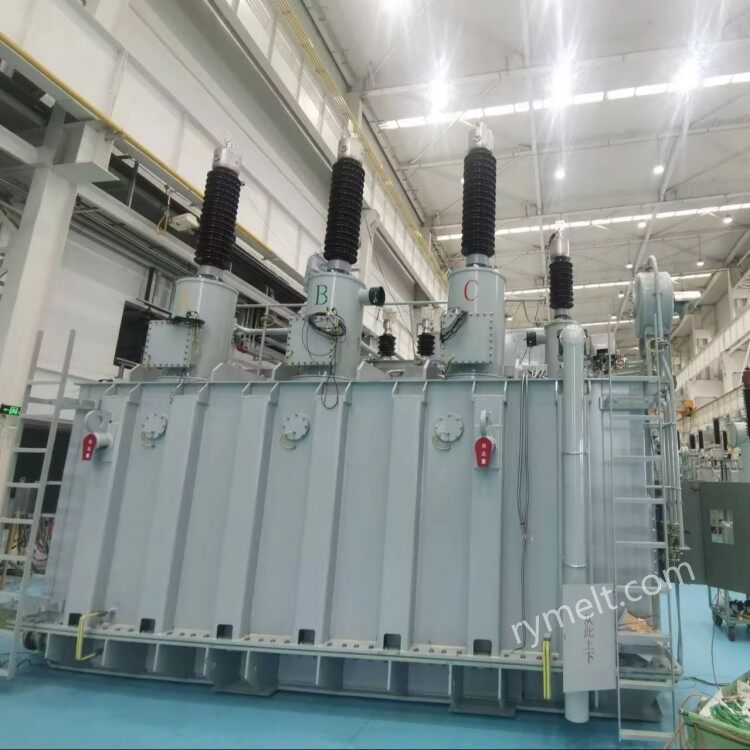
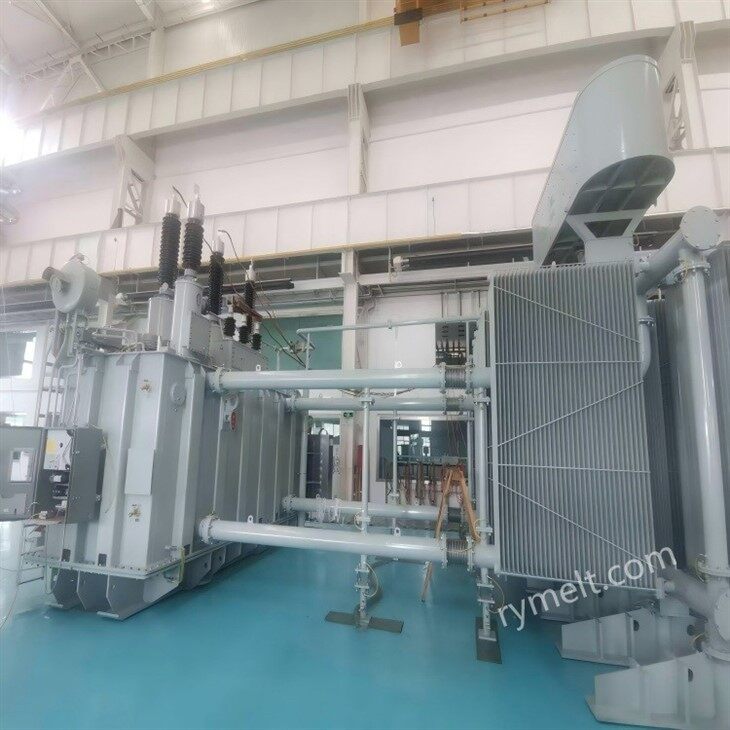
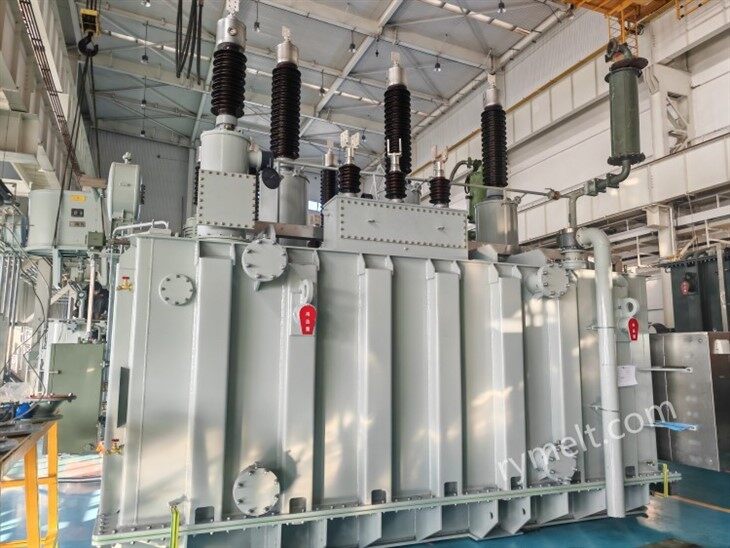
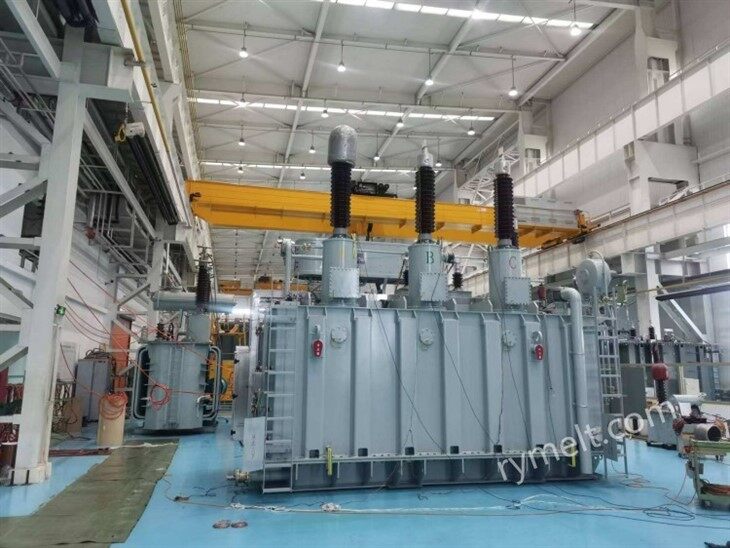
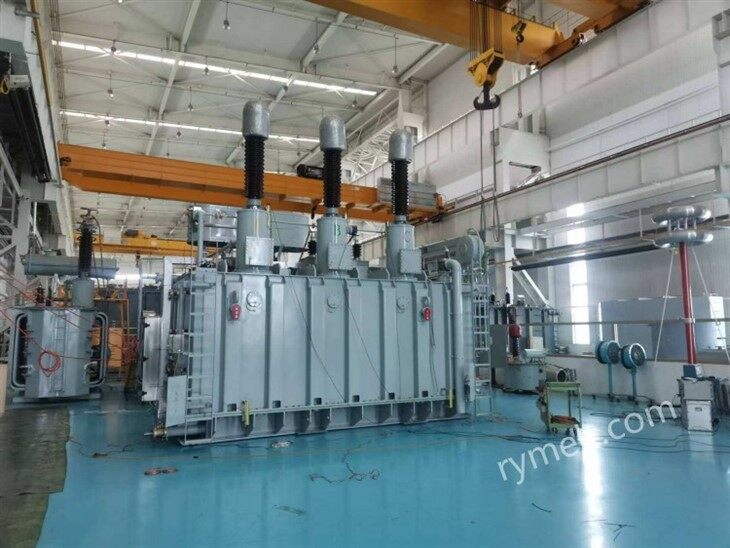
Basic Structure
Core:Typically constructed from laminated silicon steel sheets with high magnetic permeability, providing a low magnetic resistance path for magnetic flux.
Windings:
- High-voltage winding: Output voltage side, featuring more turns and relatively thinner conductors.
- Low-voltage winding: Input voltage side, featuring fewer turns and relatively thicker conductors.
Insulation System: Includes winding insulation, interlayer insulation, and lead insulation. This is critical for ensuring safe transformer operation, particularly vital for the high-voltage winding.
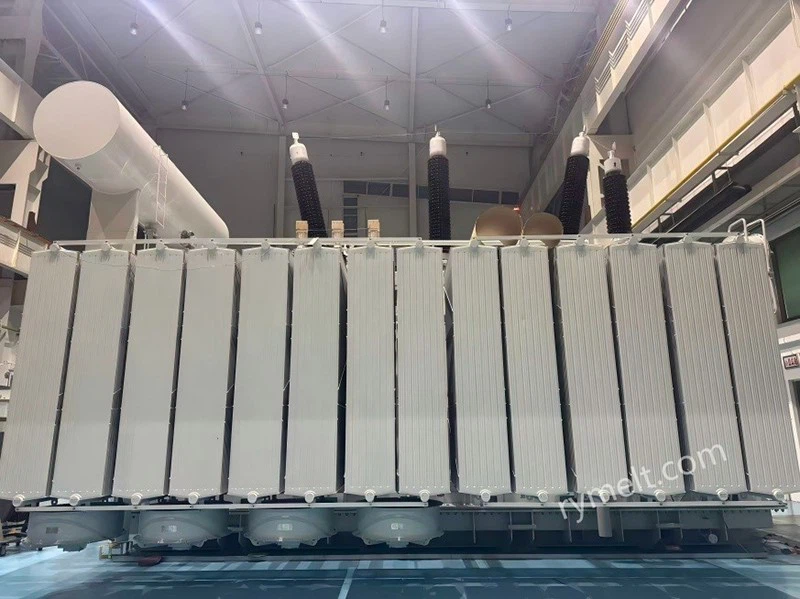
Cooling System: Oil-immersed (transformer oil serves both insulation and cooling functions) or dry-type .
Tank and Protection Devices (Oil-immersed): Tank, oil conservator (oil reservoir), breather, gas relay, pressure relief valve, etc.

Detailed Explanation of Key Parameters for Step-Up Transformers
1. Rated Values
- Rated Capacity: Unit kVA or MVA. Refers to the power output capability of the transformer under rated conditions. This is the core parameter of the transformer.
- Rated Voltage: Includes primary rated voltage and secondary rated voltage. Refers to the no-load or full-load voltage values on which the transformer design is based.
- Rated Current: Calculated from rated capacity and rated voltage. Primary and secondary rated currents differ.
2. Turns Ratio and Voltage Regulation
- Rated Voltage Ratio: The ratio of the high-voltage side rated voltage to the low-voltage side rated voltage under no-load conditions.
- Voltage Regulation: Measures the stability of the transformer's output voltage under load. It indicates the percentage change in secondary voltage from no-load to rated load. A lower value indicates stronger capability to maintain output voltage.
3. Losses and Efficiency
- No-Load Losses: Power consumed when the transformer's secondary is open-circuited and the primary is subjected to rated voltage. Primarily consists of core hysteresis losses and eddy current losses, constituting fixed losses.
- Load Losses: Power consumed when one winding is short-circuited and the other carries rated current at rated frequency. Primarily due to winding resistance, proportional to the square of the load current.
- Efficiency: Ratio of output active power to input active power. Modern large power transformers typically achieve high efficiency (>98%, even 99%). Efficiency is usually highest at 50%-75% of rated load.
4. Impedance Characteristics
- Short-circuit impedance, also known as impedance voltage. This is the percentage of rated voltage required to induce rated current in the windings when one side is short-circuited and voltage is gradually increased on the other side. This is an extremely important parameter:
- Typical values range from 4% to 15%, depending on transformer capacity and design.

5. Insulation and Cooling
- Insulation Class: Specifies the thermal rating of insulation materials used (e.g., Class A: 105°C, Class E: 120°C, Class B: 130°C, Class F: 155°C, Class H: 180°C), determining the transformer's permissible temperature rise.
- Cooling Method:
- Oil-immersed: ONAN (Oil Natural Air Natural), ONAF (Oil Natural Air Forced), OFAF (Oil Forced Air Forced), etc.
- Dry-type: AN (Air Natural), AF (Air Forced).
- Temperature Rise Limit: The maximum permissible temperature rise above ambient temperature for various transformer components (e.g., windings, top oil layer) under rated operating conditions.

6. Other Key Parameters
- Number of Phases and Frequency: Single-phase or three-phase, operating frequency (e.g., 50Hz or 60Hz).
- Connection Group Designation: Indicates the connection configuration of the transformer's high-voltage and low-voltage windings (e.g., star-Y, delta-D) and the phase relationship between their voltages (denoted by clock notation, e.g., Dyn11, Ynd1). This is critical for parallel operation and harmonic suppression.
- No-Load Current: The percentage of rated current flowing through the primary side during no-load operation. Reflects core quality and excitation characteristics.
- Noise Level: Sound pressure level during no-load operation at rated voltage and frequency, measured in dB(A).
- Dimensions and Weight: Critical for installation and transportation.
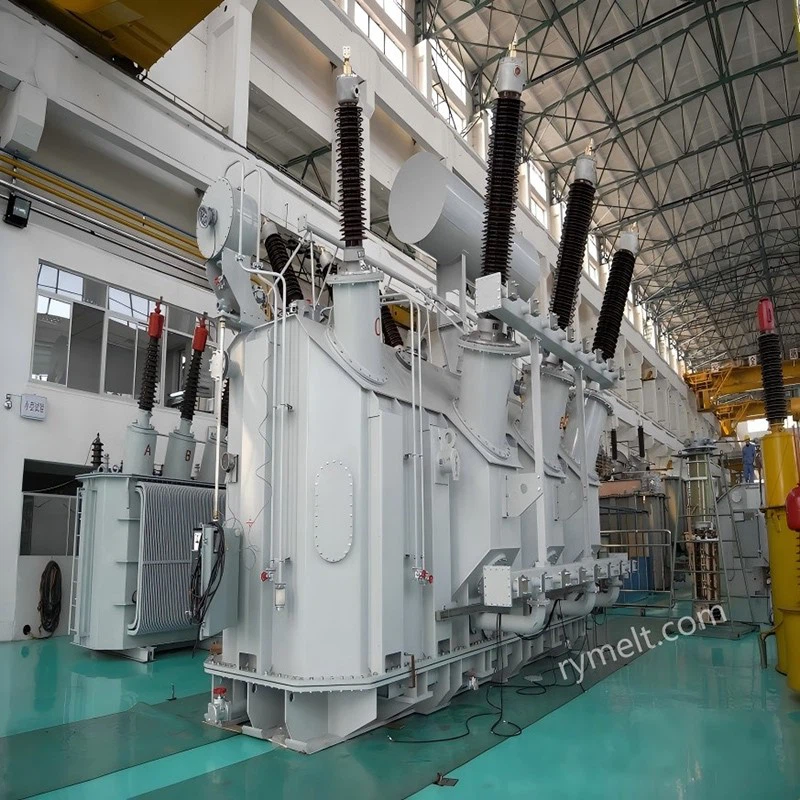
The assembly of the body of our power transformer is completed in a fully enclosed workshop with constant temperature, constant pressure, and purification, ensuring the cleanliness and dryness of the transformer body. We also use advanced kerosene vapor phase drying equipment to achieve better cleanliness of the products. The lower supporting plate and upper pressing plate of the transformer body are all made of electrical laminated cardboard with high mechanical strength and good electrical performance. The stay rods, pressing blocks, etc., used in the transformer have all undergone two densification treatments and rounding processes, which reduce partial discharge. Moreover, the centers of each winding are adjusted to be as consistent as possible, fully ensuring that the reactance heights of each coil are equal, making the force on each winding uniform, thereby improving the short-circuit resistance of each winding. In addition, the lower clamp and the lower section of the oil tank, as well as the upper beam and the upper section of the oil tank, all adopt rigid positioning, which is adjusted and locked by reverse pressure nails. Therefore, the transformer body in the oil tank can withstand the impact tests under various transportation conditions and the axial electric force during operation without displacement.
Reference Parameters for Our SZ20-63000/110 Step-Up Transformer Model
|
Parameter Item |
Parameter Value |
|
Frequency |
50 Hz |
|
Input Voltage |
10.5 kV |
|
Output Voltage |
110 kV |
|
Phase |
Three |
|
Coil Number |
Two Windings |
|
Coil Structure |
Layer Coil |
|
Type |
Oil-Immersed Transformer,Oil-type |
|
Application |
Power Transformer |
|
Product Name |
Oil-immersed Power Transformer |
|
Rated Capacity |
63000 KVA |
|
Cooling Method |
ONAN |
|
Vector Group |
Yd11/YNd11 |
|
Standard |
IEC60076/GB1094 |
|
Material |
Silicon Steel Sheet |
|
Winding Material |
Copper \ Aluminum |
|
Warranty |
12 Months |
We previously supplied SFZ18-350000/220 generator transformer for the Lingshou County photovoltaic power generation project, with a rated capacity of 350MVA. We are one of the few factories in China capable of producing transformers of such large capacity.


